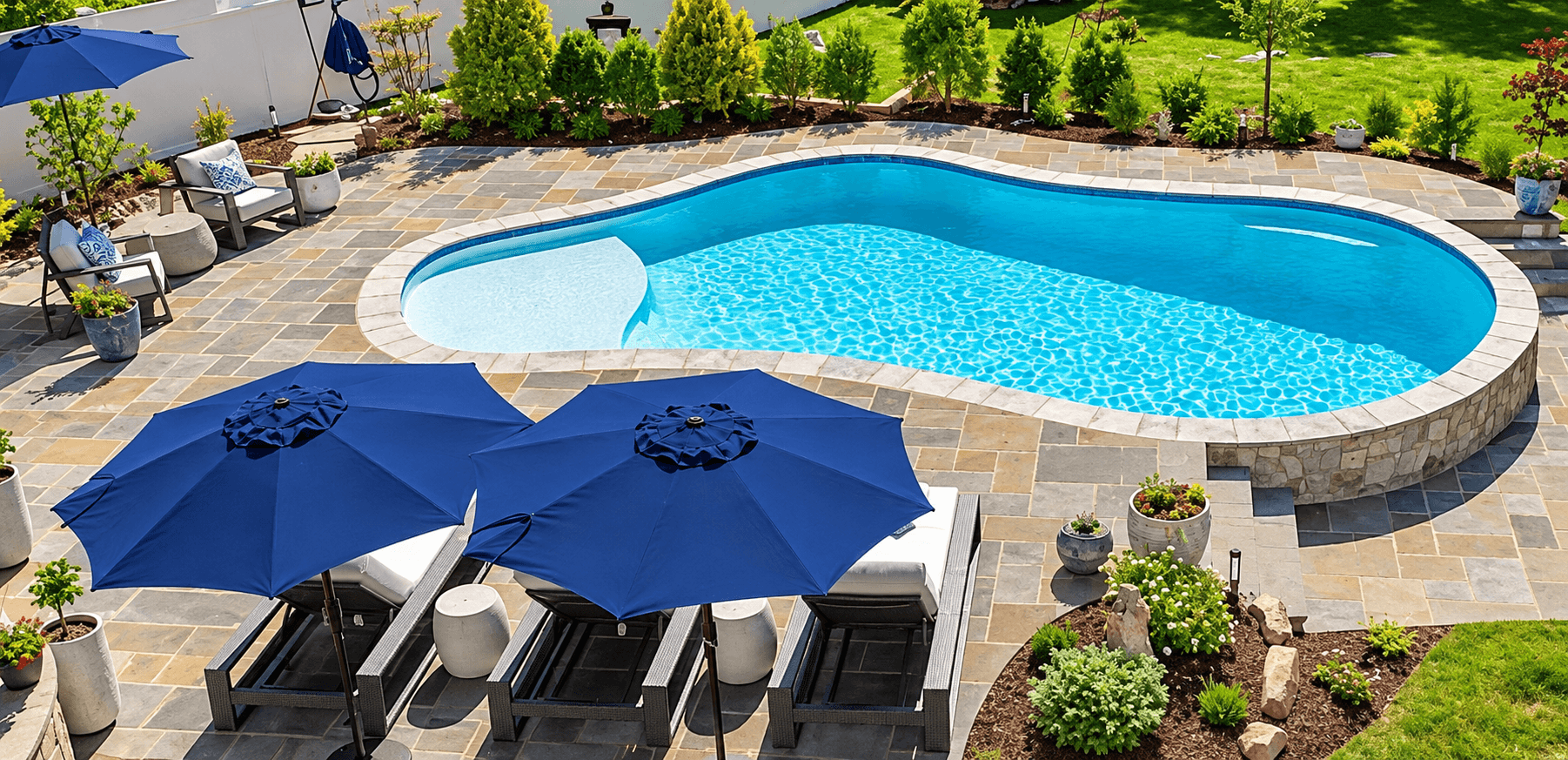
When comparing gunite and fiberglass pools in Northern Virginia, start with your property and priorities. Gunite offers extensive customization; fiberglass offers a factory-made shell with a smooth surface. Both need appropriate soil support, drainage, and winter care. Vinyl-lined pools offer another option, but no material alone solves clay soil movement or freeze-thaw concerns.
You may already know where you want the spa, how much patio space you need, or which corner of the yard catches the afternoon sun. Choosing the pool material should help those plans work, not force you into a design that feels wrong for your home. Here is how the three main inground pool types compare, with Northern Virginia conditions in mind.
Gunite or Fiberglass Pools: What Are You Actually Choosing?
Gunite: a concrete pool built around your design
Gunite is a method of placing concrete, not a different material from concrete. A crew applies the concrete over a steel-reinforced framework to create the shell, then adds the specified interior finish, tile, coping, and other details.
Because the shell is built on site, its shape, depth, steps, tanning ledge, and attached spa can be planned together. That flexibility matters when you want a lap area alongside a shallow lounging space, or when an irregular yard needs something other than a standard rectangle.
Icon Custom Pools specializes in custom gunite pool construction. The pool, patio, and surrounding outdoor features are designed as one space rather than separate additions.
Fiberglass: a manufactured shell selected from available designs
A fiberglass swimming pool arrives as a factory-made shell and is placed into a prepared excavation. You select from the manufacturer’s available models, including their dimensions, depth profiles, seating, and steps.
A model that suits your yard and the way you swim can be a practical choice. The smooth surface is also appealing to homeowners who prefer that feel underfoot. You still need a suitable delivery route, a placement plan, and properly prepared support and backfill. Choosing a finished shell does not remove the need to evaluate the property.
Vinyl liner: a pool structure with a replaceable lining
A vinyl-lined pool uses a supporting structure, commonly steel or polymer walls, with a fitted vinyl liner that holds the water. Depending on the system, you can choose from a range of shapes, dimensions, and liner patterns.
Vinyl is worth including in the comparison if its design and budget fit your plans. The tradeoff is that the liner is a separate component that will eventually need replacement. It also includes avoiding damage to that lining and following the manufacturer’s water-care instructions.
What Northern Virginia Clay Soil Means for Your Pool
The soil under your future pool deserves attention before you commit to a fiberglass or gunite pool. Some clay soils expand as they absorb moisture and shrink as they dry. Uneven support or pressure around a pool can create problems for the shell, surrounding deck, or other structures.
That does not mean every Northern Virginia backyard has the same conditions. Fairfax County’s soil descriptions identify marine clay as having high shrink-swell potential and possible perched groundwater. Other mapped soils have different characteristics. A county soil map provides context, not a substitute for examining your lot.
For a gunite pool, the engineer can specify the shell and reinforcement for the project’s design conditions. For fiberglass, the supporting base, backfill, and drainage must suit the shell and site. A vinyl pool also needs a properly supported wall and floor system. None should be treated as a shortcut around difficult ground.
Ask how your builder will evaluate soil, groundwater, drainage, and slope, and when a geotechnical engineer may be needed. The useful answer explains what happens on your property, not just which material the company sells.
Can Gunite Pools Handle Northern Virginia Winters?
A gunite pool can be designed for a cold-weather location, but concrete is not immune to temperature changes or poor construction. The American Shotcrete Association’s technical guidance notes that concrete pool structures experience seasonal volume changes and that design must account for the conditions involved.
There are several winter issues to separate: how the shell is designed and built, how water and soil behave around it, and how the pool’s plumbing and equipment are protected during freezing weather. The right shell alone does not take care of all three.
Fiberglass and vinyl-lined pools need winter preparation too. Follow the builder’s and manufacturers’ instructions for your pool, cover, plumbing, and equipment. Do not assume that a flexible shell, a heavy concrete shell, or a winter cover makes seasonal care unnecessary.
Be cautious about claims that one material cannot crack, shift, or suffer winter damage. For your backyard, a clear construction plan and an explanation of seasonal care are more useful than an absolute promise.
Compare the Finished Backyard, Not Just the Pool Shell
How much design flexibility do you need?
If you find a fiberglass model with the right dimensions and built-in features, there may be no reason to redesign it. If you want precise control over the pool’s footprint, a particular depth transition, or an integrated spa and water feature, gunite gives you more room to shape those details.
For a smaller or awkwardly shaped lot, look at the entire layout: walking space, patio seating, access to the house, and the pool itself. Icon’s guide to custom pools in small backyards explains why fitting the design to the property matters.
What does the installation schedule include?
Setting a fiberglass shell can be quicker than building a concrete shell on site, but that step is not the full project. Design, permits, excavation, utilities, decking, inspections, and weather can all affect when the backyard is ready to use.
Gunite construction also includes concrete placement, curing, and finishing stages. Ask for a schedule based on your actual scope rather than comparing a shell-placement estimate with a complete pool-and-patio build. Icon Custom Pools’ design and construction process starts with the property and carries through to orientation and ongoing care.
What will you maintain over time?
Every pool needs water testing, cleaning, and equipment care. A fiberglass surface avoids the plaster finish used on many concrete pools, but it still needs appropriate chemistry and cleaning. A gunite pool’s finish may eventually need renewal. A vinyl-lined pool will eventually need a new liner.
When reviewing proposals, ask about those future responsibilities alongside the initial build. Compare the same items: pool dimensions, equipment, decking, site work, drainage, and selected features. A shell-only figure and a complete backyard proposal are not equivalent budgets.
Questions to Ask Before You Choose a Pool Builder
A good material comparison should leave you with a clearer plan for your own yard. Before signing a proposal, ask:
- What have you identified about the soil, slope, drainage, and access on my property?
- Who determines whether the project needs additional soil testing or engineering?
- How will the pool and surrounding patio be supported and drained?
- Which features are included, and which change the scope or price?
- What does the construction schedule include, and what could change it?
- What winter preparation and long-term surface care will this pool require?
You should be able to understand why the proposed pool fits your property and how it supports how you want to use the space.
Gunite Pool Advantages at a Glance
- Custom design flexibility: Tailor the pool’s shape, dimensions, depth, steps, and added features to your preferences and backyard layout.
- Site-specific engineering: Design the reinforced concrete shell around the property’s soil conditions and project requirements.
- Custom finishes: Choose from available interior finishes, tile, and coping options to achieve your preferred look.
Frequently Asked Questions
Gunite refers to a method of applying concrete. A gunite pool has a reinforced concrete shell with an interior finish. When comparing fiberglass vs. concrete pools, gunite belongs in the concrete category.
Neither is automatically better on every clay-soil site. Soil behavior, groundwater, drainage, support, and structural design all matter. Have the property evaluated before choosing a pool based on a broad claim about clay.
A vinyl-lined pool can be an option when the selected system and installation are suitable for the site. It still needs appropriate structural support, drainage, and winter care. Include eventual liner replacement when considering ongoing ownership.
Yes. A fiberglass shell does not protect plumbing and equipment from trapped water freezing. Your winterization plan should follow the instructions for the pool and its installed components, including the recommended water level and cover procedures.
Icon specializes in custom gunite pools. Our design process brings the new pool, spa, hardscape, and outdoor living features together around your property and preferences.
Start With Your Yard and How You Want to Use It
If you want a custom gunite pool in Northern Virginia, begin with your space and what you want to do there: swim laps, relax in a spa, or make room for family weekends outside. The gunite pool pros at Icon Custom Pools handle design, engineering, permitting, and construction under one roof. Request a design consultation to start planning your dream pool in Loudoun, Fairfax, or Prince William County.