
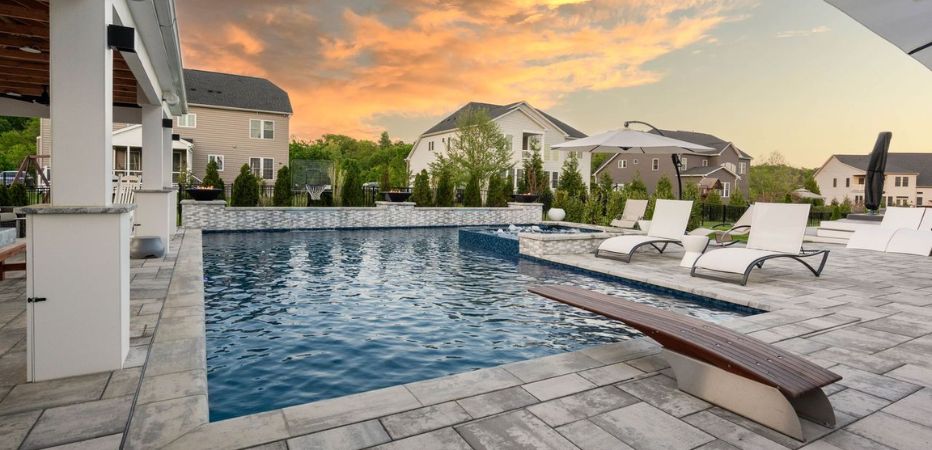
Four upgrades can make a major difference in how a swimming pool looks and functions: the interior finish, waterline tile, coping, and lighting.
Each one can refresh a specific part of an aging pool. Planned together, they can transform the entire backyard without the cost or disruption of a full pool rebuild.
If your pool is starting to feel outdated, here’s what to know about these upgrades and why many Northern Virginia homeowners choose to tackle them as one renovation.
1. Pool Finish and Plaster: The Foundation of Your Pool
Your pool’s interior finish is one of the first things you see and feel when you get in. Over time, plaster can develop:
- Rough spots
- Staining
- Etching
- Discoloration
When it’s time to replaster, homeowners generally choose from several options:
- Plaster: A traditional, cost-effective option available in different colors and finishes.
- Pebble: A more durable, textured surface that changes how light reflects through the water.
- Quartz and other upgraded finishes: Options that offer added durability and a different look from standard plaster.
A simple replaster can be one of the fastest ways to refresh an aging pool. Because the interior finish also protects the pool shell underneath, it’s both a cosmetic and practical upgrade.
2. Waterline Tile: More Than a Design Detail
Waterline tile sits where the pool water meets the coping. It helps protect the plaster edge from staining while also tying the pool’s finish into the rest of the backyard.
Outdated tile can make an otherwise well-maintained pool look old.
Replacing it allows you to update:
- Color
- Pattern
- Material
- Overall pool style
Glass and porcelain tile are popular choices, and new tile can be coordinated with updated coping, decking, and hardscape.
Replacing tile at the same time as the pool finish also makes practical sense. Both projects require the pool to be drained and the surrounding surfaces to be prepared.
3. Coping and Decking: Connecting the Pool to the Patio
Pool coping caps the edge of the pool shell, but it also significantly impacts the overall design.
Older Northern Virginia pools may have:
- Cracked or worn coping
- Narrow coping
- Outdated brick
- Plain concrete that no longer fits the backyard
Updating the coping and decking together can create a significant visual change.
It also allows your builder to connect the pool with the surrounding patio, walls, and hardscape. Instead of looking like separate elements added over time, the backyard can feel like one cohesive space.
4. Pool Lighting: Make the Space More Usable After Dark
Lighting affects more than the appearance of your pool.
Replacing older, dim, or failing lights with LED fixtures can:
- Improve visibility after dark
- Improve safety
- Extend the hours you can use the pool
- Reduce energy consumption compared with older incandescent lighting
Pool lights can also be coordinated with step lighting and surrounding landscape lighting for a more finished look at night.
In many renovations, lighting is installed toward the end of the project after the finish, tile, and coping work are complete.
5. Why These Upgrades Work Well Together
You can complete any of these upgrades individually, but there are practical reasons to combine them into one pool renovation.
Finish and tile: Both require draining the pool and preparing the same general surfaces, making them natural partners.
Tile and coping: Updating them together makes it easier to coordinate colors, materials, and transitions around the pool.
Lighting: Electrical and lighting work can often be addressed while the rest of the pool is already under construction rather than requiring another renovation project later.
Bundling the work can also mean less disruption to your backyard overall and a more cohesive finished result.
6. Other Pool Upgrades Worth Considering
A pool renovation can also be a good time to look at equipment, safety features, and custom water features.
Pool Equipment
Older equipment may be worth replacing while other work is underway. For example, variable-speed pumps can be more energy-efficient than older single-speed pumps.
Water Features
If you’re considering features such as:
- Built-in benches
- Tanning ledges
- Sheer descents
- Bubblers
Planning them alongside the renovation can prevent you from disturbing newly finished surfaces later.
Safety
Safety should remain part of the renovation plan. Depending on the project, that may include secure handrails, appropriate coping, and properly grounded pool lighting.
7. What to Expect During a Pool Renovation
A pool finish, tile, coping, and lighting renovation typically follows a straightforward process:
1. On-site assessment
Your builder evaluates the existing finish, tile, coping, equipment, and other components.
2. Design and material selection
You choose finishes, tile, coping, lighting, and any additional features.
3. Draining and preparation
The pool is drained, and the surfaces are prepared for renovation.
4. Renovation work
Plaster or another finish, tile, coping, and other selected improvements are completed.
5. Lighting and final checks
Lighting is installed or updated, plumbing and equipment are checked, and the pool is prepared for use.
The timeline depends on the project scope. A straightforward replaster and tile update will generally take less time than a renovation that also involves decking, plumbing, equipment, or structural changes.
Early spring is a popular time for Northern Virginia homeowners to schedule pool renovations so the work is completed before swimming season.
When Is the Best Time to Renovate a Pool?
There are two natural windows for pool renovations and upgrades in Northern Virginia: when pool season starts to slow down in the fall and when it is about to pick back up in the spring.
Fall can be a particularly good time to tackle projects such as a new pool finish, tile, coping, or lighting. With less demand for pool use after summer, homeowners can complete the work while the pool is naturally seeing less use.
Spring is another good window, especially for homeowners who want the renovation finished before regular swimming begins. Planning ahead gives the project time to be completed before the pool is back in daily use.
The right timing depends on the scope of the renovation, material availability, and scheduling. If you’re considering multiple upgrades, starting the conversation before your preferred renovation window can give you more flexibility.
Frequently Asked Questions
No. You can start with a pool finish and tile refresh and address coping, pool decking, lighting, or other upgrades later. Combining work can be more efficient, but a phased renovation can make sense for some budgets.
A pool may remain out of service for several weeks once draining and renovation work begin. The exact timeline depends on the scope, permitting, materials, and how much of the pool and surrounding area is being renovated.
Yes. A renovation can be a convenient time to add features such as a tanning ledge, built-in bench, sheer descent, or bubbler, particularly when the surrounding coping and decking are already being modified.
A full renovation can include a new interior finish, updated waterline tile, new coping, refreshed decking, upgraded lighting, and pool equipment improvements. The exact scope depends on the existing pool’s condition and your goals for the space.
Start Your Northern Virginia Pool Renovation Project
At Icon Custom Pools, we approach pool renovations as a complete project. Our team can help you evaluate the existing finish, tile, coping, lighting, and equipment, then determine which improvements make the most sense for your pool.
From material selection through completion, we manage the renovation so homeowners in Loudoun County and throughout Northern Virginia can enjoy a backyard that looks better and functions better.
If your pool’s finish, tile, coping, or lights are showing their age, contact Icon Custom Pools to discuss the right renovation scope for your backyard and budget.